Sec 112 · Sports · Row 07
Wrigley Field, from the bleachers
Ivy on the walls, a hand-turned scoreboard, neighbours watching from their rooftops and plenty of afternoon games. Here is how to plan a day at Wrigley, starting from the outfield seats.
- Event
- Sports
- Buy
- Weeks before, for weekday games
- Best months
- May, June and September
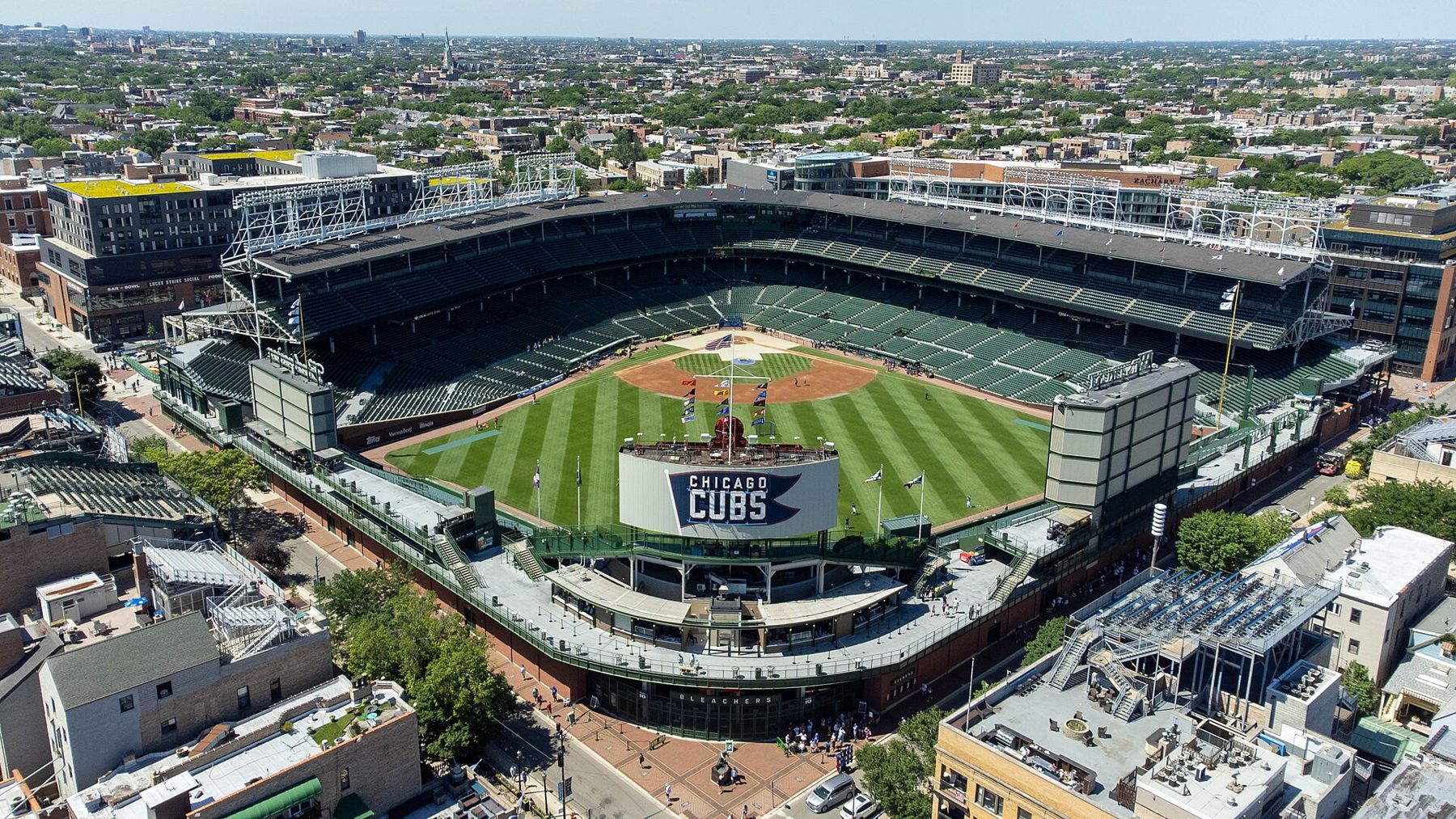
Wrigley Field opened in 1914 and has been home to the Chicago Cubs for more than a century. It is the second-oldest ballpark in the major leagues, after Fenway Park in Boston, and it sits in a residential neighbourhood on the North Side of Chicago, surrounded by apartment buildings and narrow streets.
A lot of visitors want one thing from Wrigley: a sunny afternoon in the bleachers. Here is how to get it, and what else is worth knowing.
The ivy, the scoreboard and the park
The outfield walls at Wrigley are covered in ivy, which turns green during the season and brown as autumn arrives. A ball that disappears into it during play is a ground-rule double. Above the centre field bleachers is the manual scoreboard, where numbers are still changed by hand as the game goes on.
The park has been renovated in stages over recent years, with new clubs, video boards and a plaza outside, but the field and its walls still look much as they have for decades.
The bleachers
The bleachers wrap around the outfield from left field to right. They have been central to Wrigley's identity for decades: sunny, loud and close to the outfielders. Bleacher tickets are traditionally general admission within the bleachers, meaning you sit where you find space, though policies and sections change. Check what your ticket says.
A few things to know:
- Arrive early. If seating is first come, the front rows and shaded spots go quickly after gates open.
- Sun. Most bleacher seats face the afternoon sun. On a summer day game, it is hot.
- The view. You see the outfield up close and the infield at a distance. Calls on close plays at the plate are hard to judge from out there.
- The entrance. The bleachers have their own entrance in the outfield, separate from the main gates by the famous marquee at Clark and Addison.
If you want a view of the whole field, seats in the lower and upper decks behind the infield are the better choice. Some lower seats under the upper deck have support posts in the way, so read listing notes, just as you would at Fenway. Our guide on choosing a seat covers how to read those notes.
The rooftops
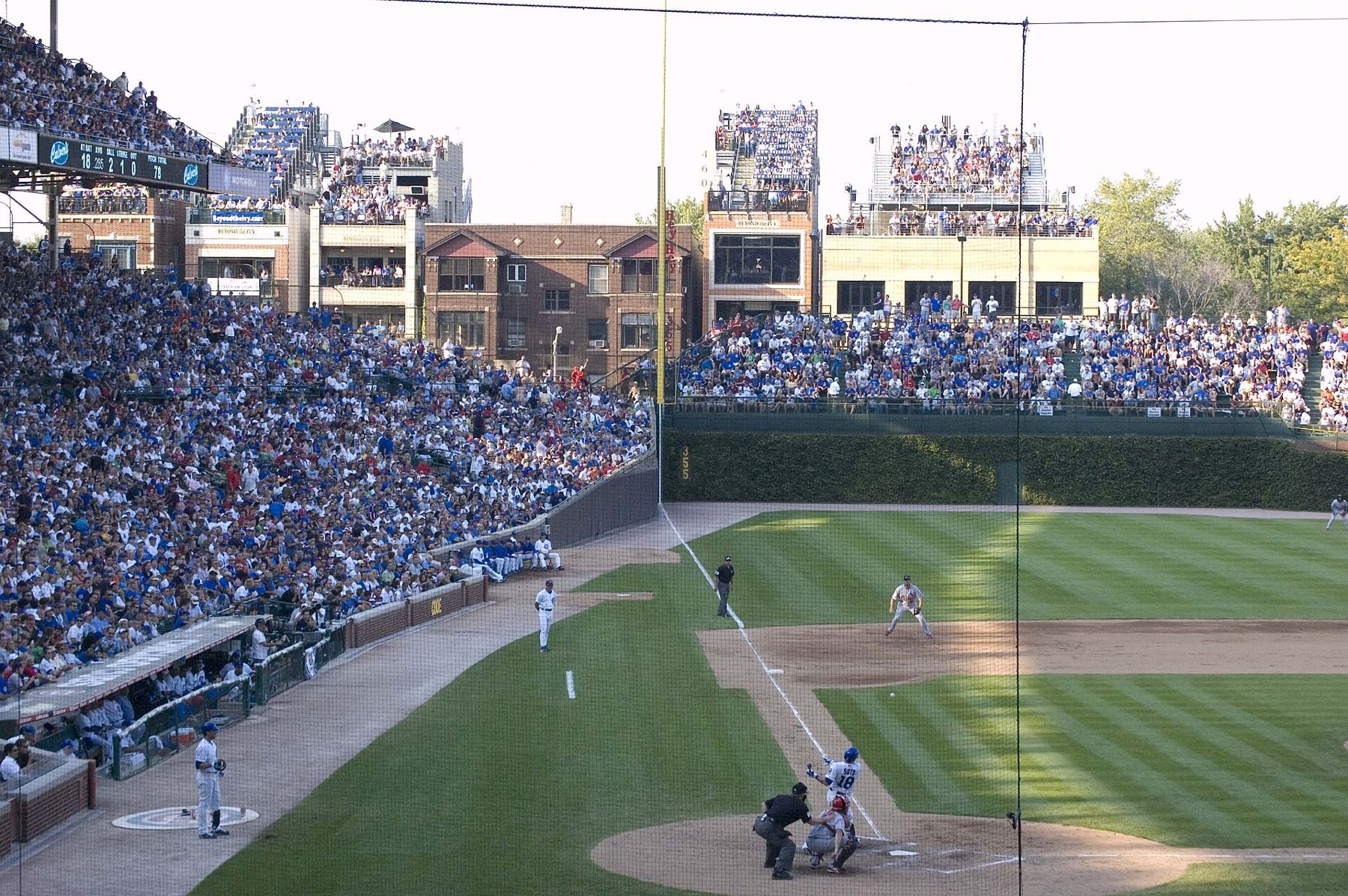
Across Waveland and Sheffield Avenues, buildings have rooftop stands that look into the park. Watching from the rooftops is a Wrigley tradition. Today, rooftop tickets are sold by the building operators as a separate experience, often with food and drink included. The view is distant and some has been reduced by the outfield video boards, so check the angle for the building you are considering.
A rooftop is a different experience from a seat inside the park. It suits groups and celebrations more than fans who want to follow every pitch. If it is your first visit, a seat inside the park is the better choice: you hear the crowd, see the scoreboard up close and walk the old concourses. Save the rooftop for a second trip, or for a group outing where the game is only part of the point.
Also in the standsA game at Fenway ParkDay games and the season
Wrigley had no lights for night games until 1988, and the Cubs still play more day games than most teams. That makes Wrigley a good park for travellers who want an afternoon game and an evening free.
Chicago weather swings widely. April and early May can be cold and windy, especially off the lake. Summer is warm and humid. September is often the most comfortable month. The wind direction even matters to the game itself: blowing out, balls carry; blowing in, they die in the outfield.
Buying tickets
Tickets are sold through the team's official seller, and prices vary by opponent, day of the week and time of year. Weekday afternoon games early in the season are the easiest and usually the cheapest. Weekend games in summer, rivalry series and late-season games in a pennant race are the hardest.
If you buy resale, use the team's own exchange or a protected marketplace and make sure the ticket ends up in your own app. Our guide on buying resale tickets safely has the details. Postponement and rain policies change, so check the current rules before you buy.
Getting there
The easiest way to reach Wrigley is the CTA Red Line to Addison, which stops right beside the park. Trains are packed before and after games, so leave extra time. Several buses also run along nearby streets. Driving is slow, and parking in the neighbourhood is limited and expensive on game days, with residential permit rules on many streets.
Coming from out of town, both Chicago airports connect to the city by train, with a change needed to reach the Red Line. For timing your flight, see our guide to flight search tricks that still work.
On the day
Gates usually open a while before first pitch. The streets around the park, often called Wrigleyville, fill up hours before game time on weekends.
- Check the bag policy before you go. Size limits are strict at most parks, and they change.
- Load your mobile ticket before you leave home.
- Bring sunscreen and a hat for the bleachers, and a jacket for spring or night games.
- Expect crowds at Addison station after the final out, and give it a few minutes.
The feeling of the place is the point. Sit in the sun, watch the scoreboard numbers change by hand, and let the game take as long as it takes.